Words: Cornelia Falknäs
Photos: Taz Blacklaw
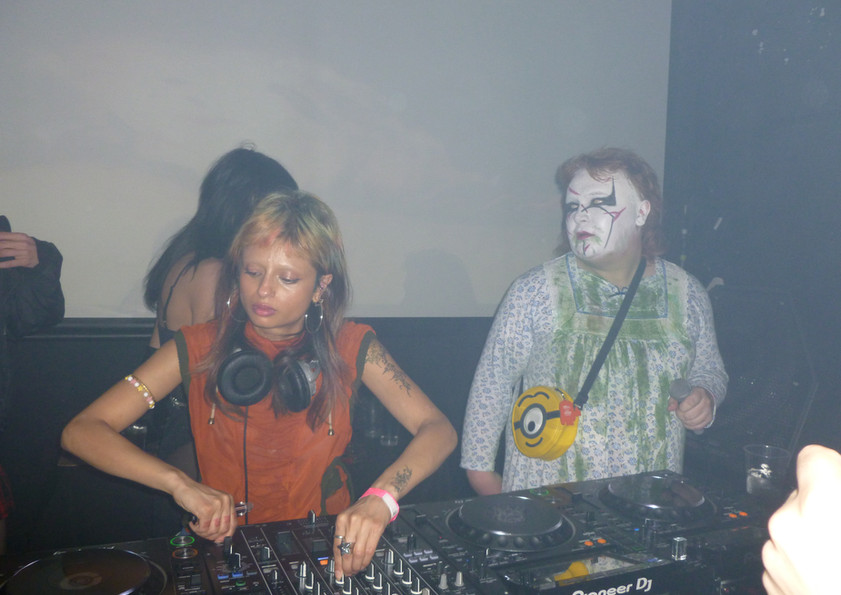
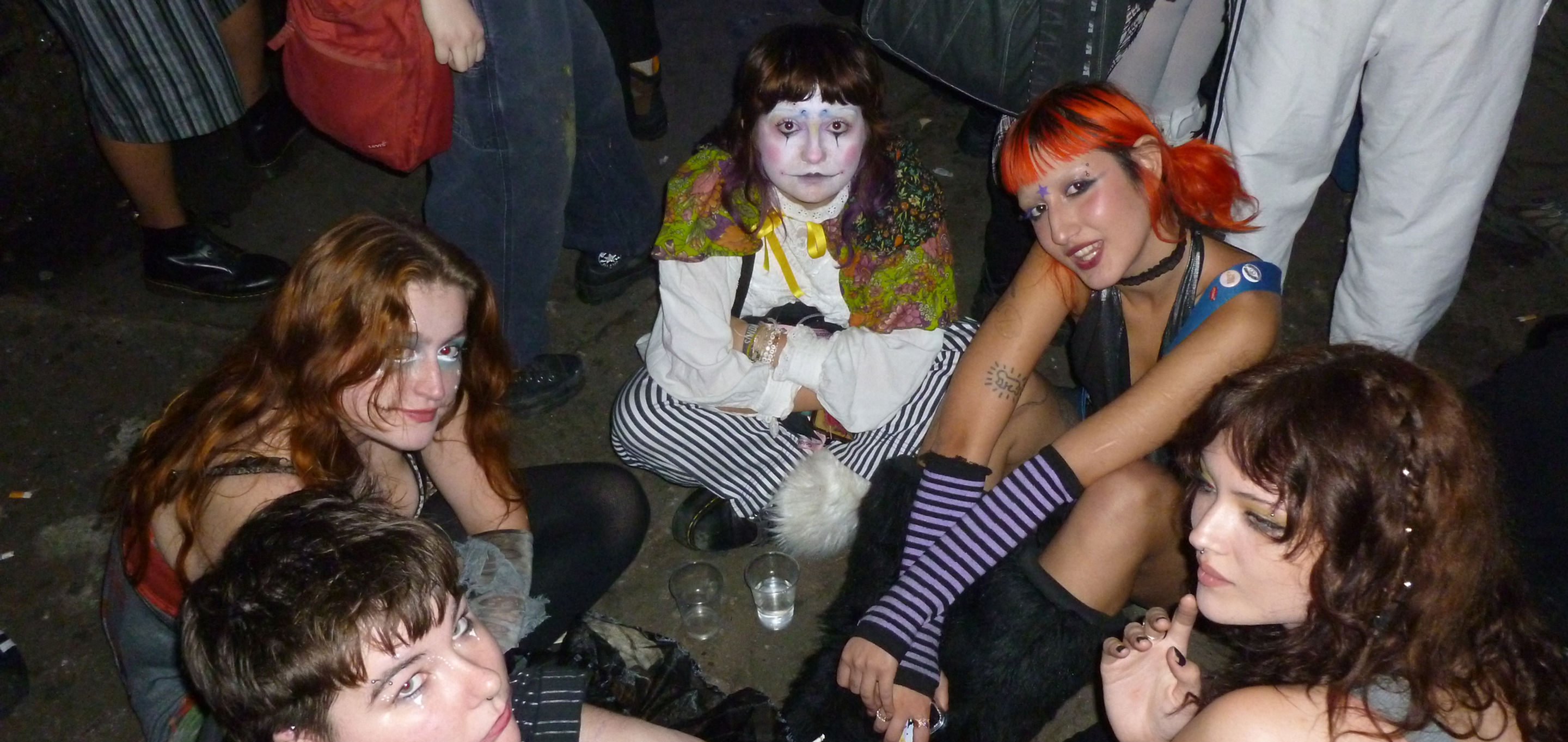
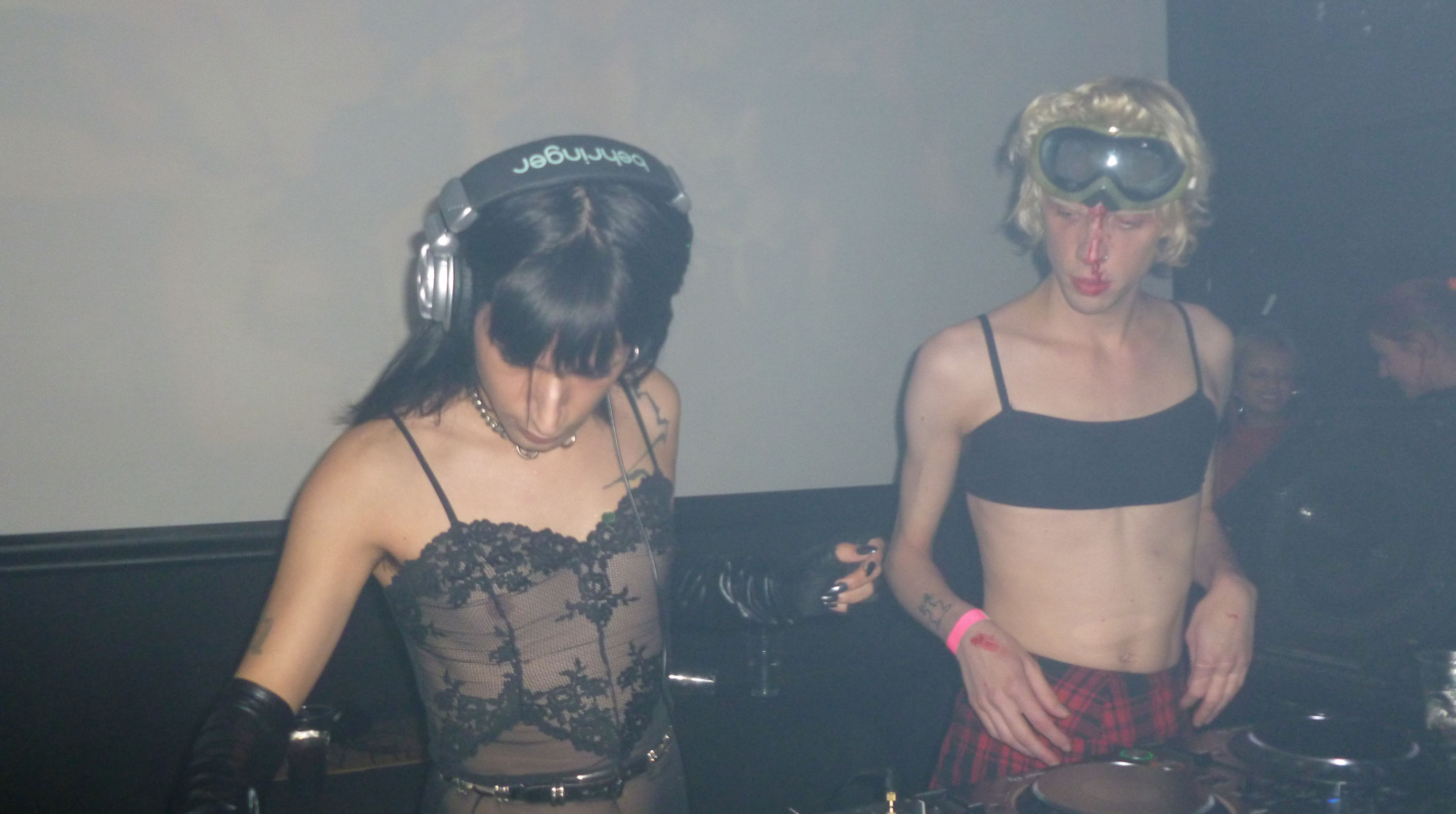
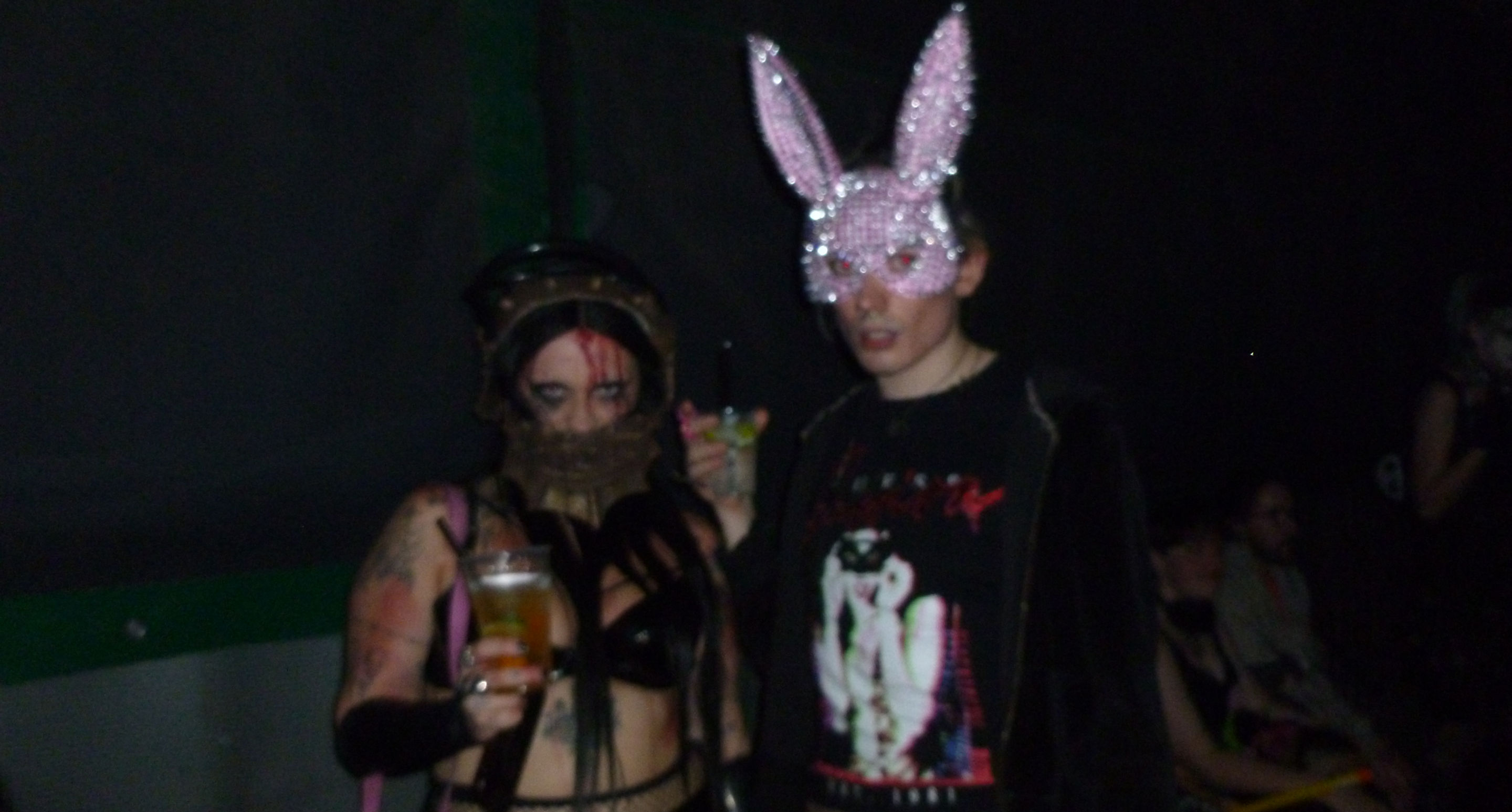
Debuting earlier this year, the queer club night Mums Against Donk has already acquired a dedicated following, and tickets to their events now tend to sell out within minutes. Step onto their dancefloor and you’re stepping onto a different planet – a planet with a captivating atmosphere populated by people dressed as everything from clowns to bunnies, a planet where the air boils from enthusiastic movements to the silly soundtrack of bouncy music, and maybe most importantly – a planet where no sadness exists.
“We don’t play sad songs,” says Mums Against Donk founder and DJ Alterum. “I play The Winner Takes It All by Abba, which I would say is quite a sad song, but then it has a silly twist on it, it goes into a hardcore rave song. Something I say to the DJs is ‘try to avoid sad music,’ because we don’t want anyone crying. Unless it’s with laughter – the only crying you’re allowed to do at Mums Against Donk is with laughter.”
“We don’t play sad songs … the only crying you’re allowed to do at Mums Against Donk is with laughter“
In the absence of sad songs, what you will hear blasting through the speakers at Mums Against Donk is just that – donk. Described in Vice as “the apotheosis of all ridiculous dance music to date”, the genre originated in the Netherlands at the end of the 90s, and then spread to the North of England where it grew into communities with dedicated followings. Characterised by its “donk sounding” beats, it’s a bouncy and upbeat type of hard dance music that in recent years often comes in the form of silly nostalgic pop bootlegs. After all, the most classic song of the genre is Blackout Crew’s Put A Donk On It, that conveys the message that all music gets better if you – you guessed it – put a donk on it.
The seed of the idea that later turned into Mums Against Donk started to grow when Alterum moved to London for university and entered the city’s queer nightlife. She found classic venues like G-A-Y Late and Heaven “a bit boring” due to the crowd and atmosphere but liked that Madonna and Lady Gaga were played on the dancefloor. Other parts of the queer night scene provide a drastically different type of music:
“A lot of queer clubs are just hardcore or techno, and there’s no shade on them at all, but I got a bit bored at times,” Alterum says. “So I guess it was a selfish thing in a way, because I wanted to create the club that I wanted to go to.”
Prior to Mums Against Donk, she was putting on some club nights at Dalston Superstore, and once she prepared a donk set: “Everyone thought I was going to play like hardcore techno, but then I put together a donk set because I thought it was quite funny and camp. It brought me back to those G-A-Y Late clubbing days: a bit cringe but you get on with it.”
After this, Alterum did some research on donk while thinking about a concept for a new club night. “It’s a very working-class genre, which to a lot of the upper and middle classes of this country is music for chavs and people that aren’t very nice to be around, so donk got banned from loads of clubs. So there was that idea in my head – people are against donk.”
This idea had grounds. In a text published on The Guardian’s music blog readers were encouraged to “actively prevent people” from buying Put A Donk On It, and Vice famously referred to it as “the lowest common denominator of British dance music”.
“What if mums are against donk?”
The concept of Mums Against Donk finally came into being with the help of a UK parent network: “I was reading through Mumsnet one night, because I have this weird habit of going onto there just to see what everyone’s complaining about now. I find it quite entertaining. There were these mums complaining about queer clubbing, and I thought quite a funny concept would be: ‘What if mums are against donk?’ I played with that idea – what if I threw a club night with the idea that it’s against donk, but it’s just a trick. You go through the door and all you hear is donk and happy hardcore and all associated genres.”
Their first Instagram post introduced Mums Against Donk as “a brand new queer-focused Happy Hardcore and Donk club night in London”. The word spread quickly. “At the time it was an account with zero followers. In a day or so we got 500,” Alterum says. Soon after, their first event, at Venue MOT in late April this year, was announced, and tickets sold out. “I didn’t expect that to happen, because none of my nights before this had ever sold out. And on the night, the place was packed from the get-go, people were there immediately which is so weird for clubs.”
“It’s accessible, silly, and people hate it – put all that together and you get Mums Against Donk”
Alterum attributes the big reach of the initial announcement to the poster: “I made it in Windows Paint, and then I just touched it up in PowerPoint. I studied graphics at school, and I was always told that Comic Sans is like the devil, you can’t use it. I went into it making a poster that was very ‘anti-poster’. It was things people always told me not to do. I put Comic Sans on it, put stupid little smiley faces and repeated imagery all over. Someone said it was genius because it hit that nostalgia spot of childhood.” Moreover, Comic Sans is a font that is easy to read and recommended by the British Dyslexia Association to facilitate for dyslexic readers.
“I thought: it’s accessible, silly, and people hate it – put all that together and you get Mums Against Donk.”
The accessibility side of the club night has been central since the beginning and didn’t stop at the choice of typeface. All their stand-alone events have been on ground floor level, and the last three nights have taken place at Corsica Studios, where they have used one of the two dance floors to create a sensory space. This was developed together with Spectrum, another London club night with a big focus on welcoming neurodivergent people.
“We came up with this idea of a rest space that isn’t the smoking area, and we wanted to make it neurodivergent friendly. A lot of the people that go to queer raves also happen to be neurodivergent and I’m not sure why that is. Maybe because you don’t have to worry about being judged for who you are in these spaces. I wanted to push the idea that you can come here and be safe, and there is a space for you even if you can’t dance on the sweaty dance floor,” Alterum explains. “You can go in there to chill, we play low-level music, there is no smoke, no bright lights. We have beanbags, tables, chairs, stim toys and something we’ve recently introduced is that we cover the tables with paper and put out crayons so you can sit and draw.”
“Mums Against Donk feels like a dreamland where all the fairies and elves meet once every so often to go nuts”
Willow, who has been to Mums Against Donk twice so far, thinks the sensory space is a key part of what makes the night special. “Having that extra room is a brilliant way to keep you staying throughout the whole night, because sometimes you might get overstimulated and want to go home earlier just because you’re a bit done out,” she says. “To be able to take a break without going to the smoking area is literal perfection.”
Willow says that Mums Against Donk means a lot to her already and stands out from other club nights: “I can look forward to it and buy a ticket without even seeing the line-up because I know it’s going to be a great night regardless. Alterum is such a hero of mine and every event she’s played at has been a banger in my books. Mums Against Donk feels like a dreamland where all the fairies and elves meet once every so often to go nuts and I love it.”

The very first line-up featured Peggy Viennetta, a well-known and experienced DJ within the scene, and one of the people behind the party collective Planet Fun. Alterum says that the support and advice from Peggy and Planet Fun is a big part of why Mums Against Donk came into existence: “We wouldn’t exist without them, to be honest.” Two of the other DJs who played at the first event were Holly Warcup and 3DMA, who are both now resident DJs at Mums Against Donk.
“The first time I continuously call a miracle because I had like £500 that I had put aside in a bank account, and I was like: ‘I can make this work’. A lot of the DJs on the first night were very friendly, they said because it was the first one, they were willing to do discounted rates,” Alterum says. “With those £500 I paid the holding deposit at MOT and paid the safety team, and then the ticket sales covered the rest.”
“The push for sobriety is definitely on the rise, and the idea of minimalism and all this techno is not scratching the itch”
3DMA, who got into playing and producing donk during lockdown while studying at Central Saint Martins, has since toured Australia and played in several different countries around Europe. When they agreed to play at the first Mums Against Donk, they didn’t really know what to expect: “I wasn’t sure how people were going to react,” they say. “But I found that the crowd was really sweet, and it was a very friendly environment.”
They think that donk is more inviting than many other types of electronic music: “When you’re exploring dance music, it’s always very abstract, especially with techno. It’s very unapproachable and to get involved with a scene you kind of have to know the DJ and follow that stuff. With donk it feels like an invite to come into the scene and be exposed to something different. I think the beauty of donk, or more specifically, about bootlegging and remix culture, is that it’s taking something that you are already comfortable with, and just altering it, so it’s immediately making it more welcoming to people who haven’t been involved.”
3DMA’s own bootlegs of well-known songs are reaching a large audience on SoundCloud. For example, their donk mashup of Justin Timberlake’s SexyBack and Khia’s My Neck, My Back (Lick It) has been listened to more than 175,000 times. They think this type of music will increase in popularity as people within the queer rave scene choose to take less drugs: “The push for sobriety is definitely on the rise, and the idea of minimalism and all this techno is not scratching the itch, it needs to have more to it,” they say, noting that there is a lot of pressure around taking drugs to be able to enjoy yourself at certain techno events. “So I can see that this specific culture of music is definitely going to take over a bit more.”
Sobriety is certainly on the rise, at least at Mums Against Donk. Starting from their next event, their sensory room will be a completely sober space, where neither drinking alcohol nor taking drugs will be allowed. “We don’t do anything like that in there because then people don’t fall into that rabbit hole of ‘Oh, someone else is doing it, so I must do it’,” Alterum says. “We’re also cracking down on usage on the dance floor and people who are just offering things to people. That’s not how we vibe. I’ve recently gotten sober from drugs completely, and I feel like part of that is because I was mainly doing them because someone was offering them to me. So, we’ll politely ask people not to do that. Eventually, I want to do a sober day rave to show that you can do this without drugs.”
Nightlife is a place filled with euphoria, but at the same time it’s an environment where it can be easy to fall into destructive behaviours or end up in risky situations. For Alterum, safety is a priority, and she has been working with the queer-run welfare team Safe Only since the beginning. Miles, who went to the most recent Mums Against Donk night at Corsica Studios had a negative experience that was turned into a positive one thanks to Safe Only: “They have an insanely good welfare team. I saw someone from my past that I was very unhappy to see, and I had a panic attack. I got to speak to welfare instantly, two people took me to a quieter room on the side. They brought me water, talked to me about it and then distracted me from it and afterwards I was like: ‘I want to go back in dancing, everything’s fine,” he says.
Miles is one of the organizers of a new queer rave, and he says that Mums Against Donk is a role model when it comes to their safe space policy and routines: “A lot of queer clubs have safe space policies, but it’s nice to actually see that not only do they have one, but they really put it into place and make a big effort rather than just being like ‘we have a safe space policy because we have to say that.’”
Seemingly, Mums Against Donk is not only thriving on its own, but also inspiring other nights, in a time when London’s queer nightlife in some ways appears threatened. Many of the city’s LGBTQ+ venues have shut down in the last decade (most recently the aforementioned G-A-Y Late), and concerned voices are being raised about the “straightification” of queer club nights. “Originally we were going to create a space just for queer people,” Alterum says. “But then you can never really say ‘this is a queer-only space’. You should be able to, but that’s just impossible in clubs, because there will be staff members of the venue who aren’t queer, there will be security members who aren’t queer, but I try to keep things fresh. Everyone who works for Mums Against Donk is queer, including myself, so it’s queer and trans-run, and we’ve always made sure that the person on the door is queer slash trans. The only exception to that rule is our DJs, but we always ensure that everyone we hire is an ally at the very minimum. If they can’t get past me, what’s the point of being there anyway?”
“Don’t do anything that’s not light-hearted. Have fun. The world is so dreadful.”
As for the future of Mums Against Donk, Alterum wants to go bigger and better: “The reason we do them every two months is because I can’t even afford to do it every month. I am working a regular job. Mums Against Donk is my passion project. But I’m hoping to take it higher and turn it into something bigger, not for the glory but more to show people that this is how we can do things,” she says. “Something I would like to make a reality one day is a festival or day raves or bigger scale events, and just focus on the Mums Against Donk ethic rather than a cash grab from young queer people, which I think is quite unethical. That’s why we try to keep our tickets as cheap as we can while also being able to pay for people to come join us.”
And what is the key to success in London’s nightlife? “Don’t do anything that’s not light-hearted. Have fun. The world is so dreadful. We’re constantly hearing about all these horrible things happening, and it’s all doom and gloom. But the whole point of this getting started is to forget about all that for a minute. Just keeping things silly, keeping people distracted from the reality of the world just for a few hours. Come and join the clowns, we will make you laugh.”★
 Cornelia Falknäs